HOLDFAST Project
Wrack Series
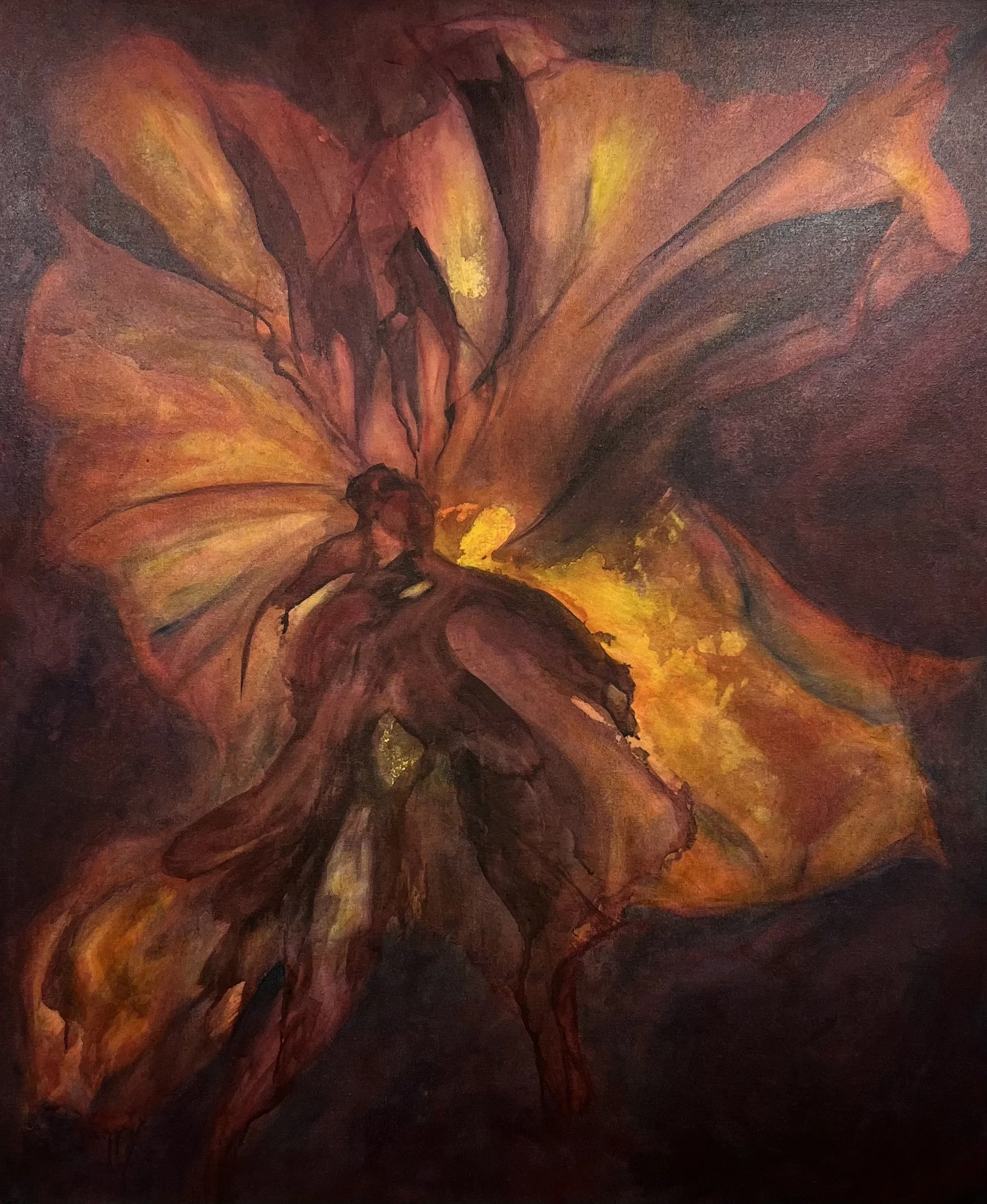
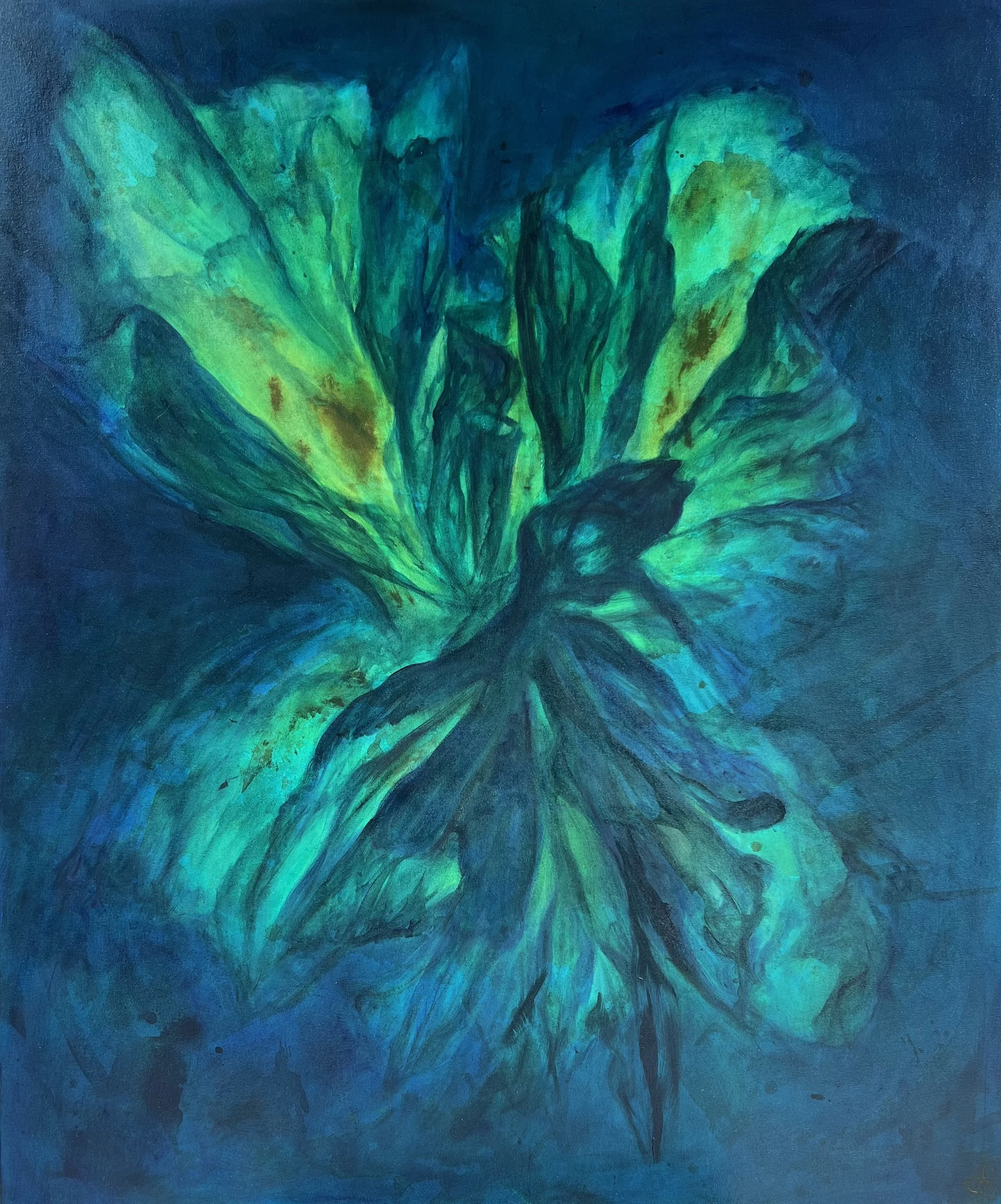
Wrack Brown. Acrylic, oil paint on canvas. 120 × 100cm
Photo Credit: Jack Archer www.jarchphotography.com
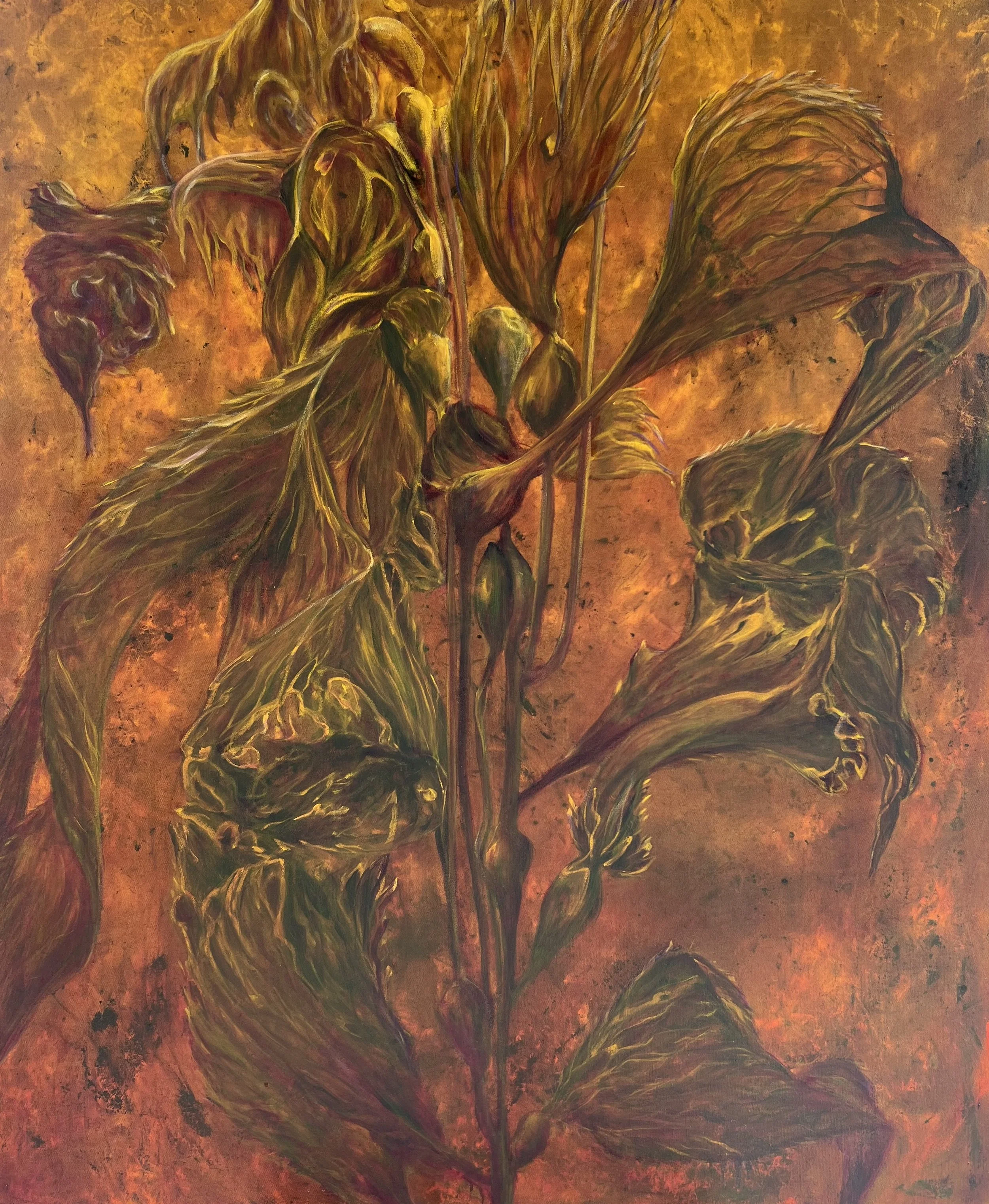
Wrack Green. Acrylic, oil paint on canvas. 120 × 100cm
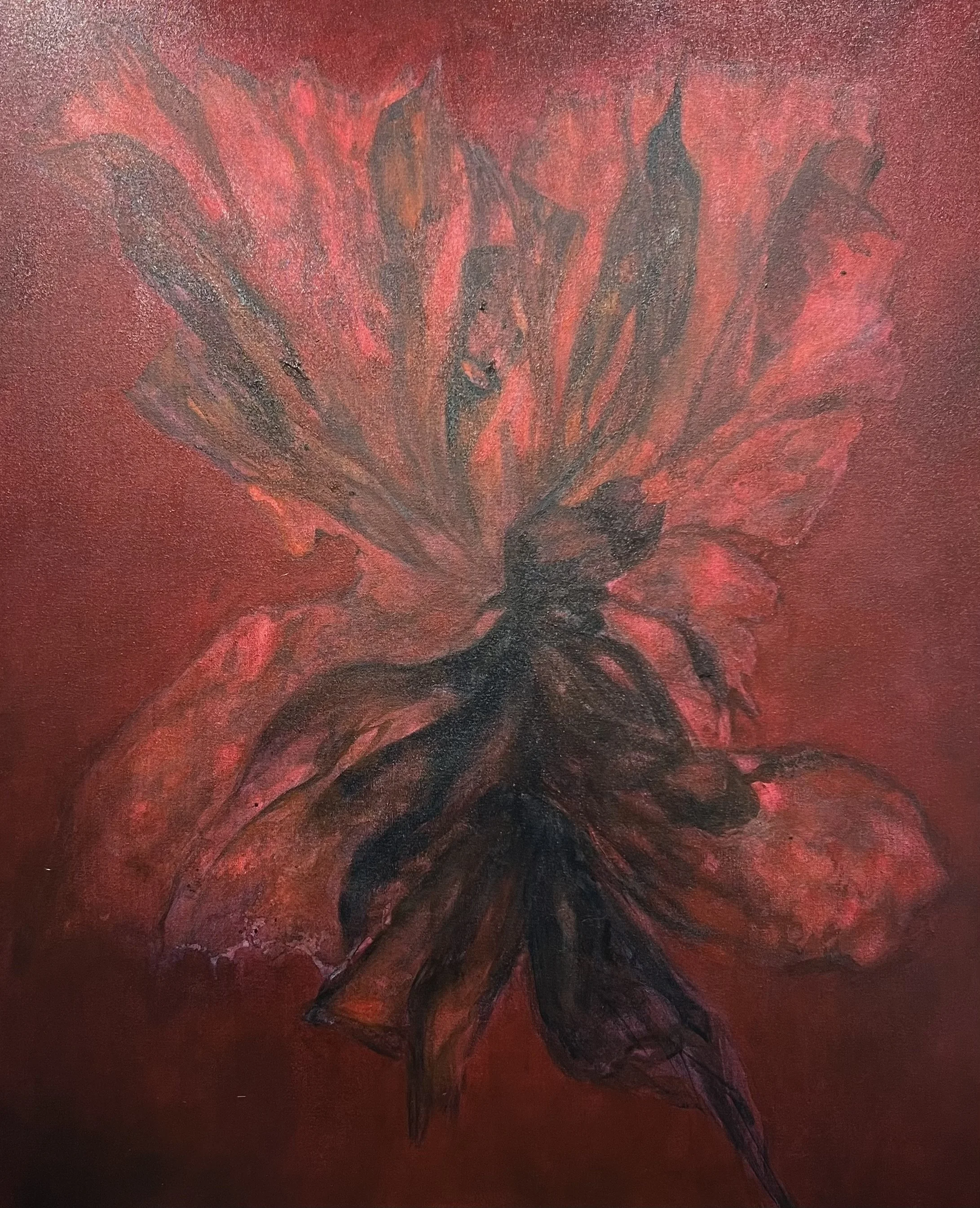
Wrack Golden. Acrylic, oil paint on canvas. 120 × 100cm
Wrack Red. Acrylic, seaweed pigment, oil on canvas. 120 × 100cm
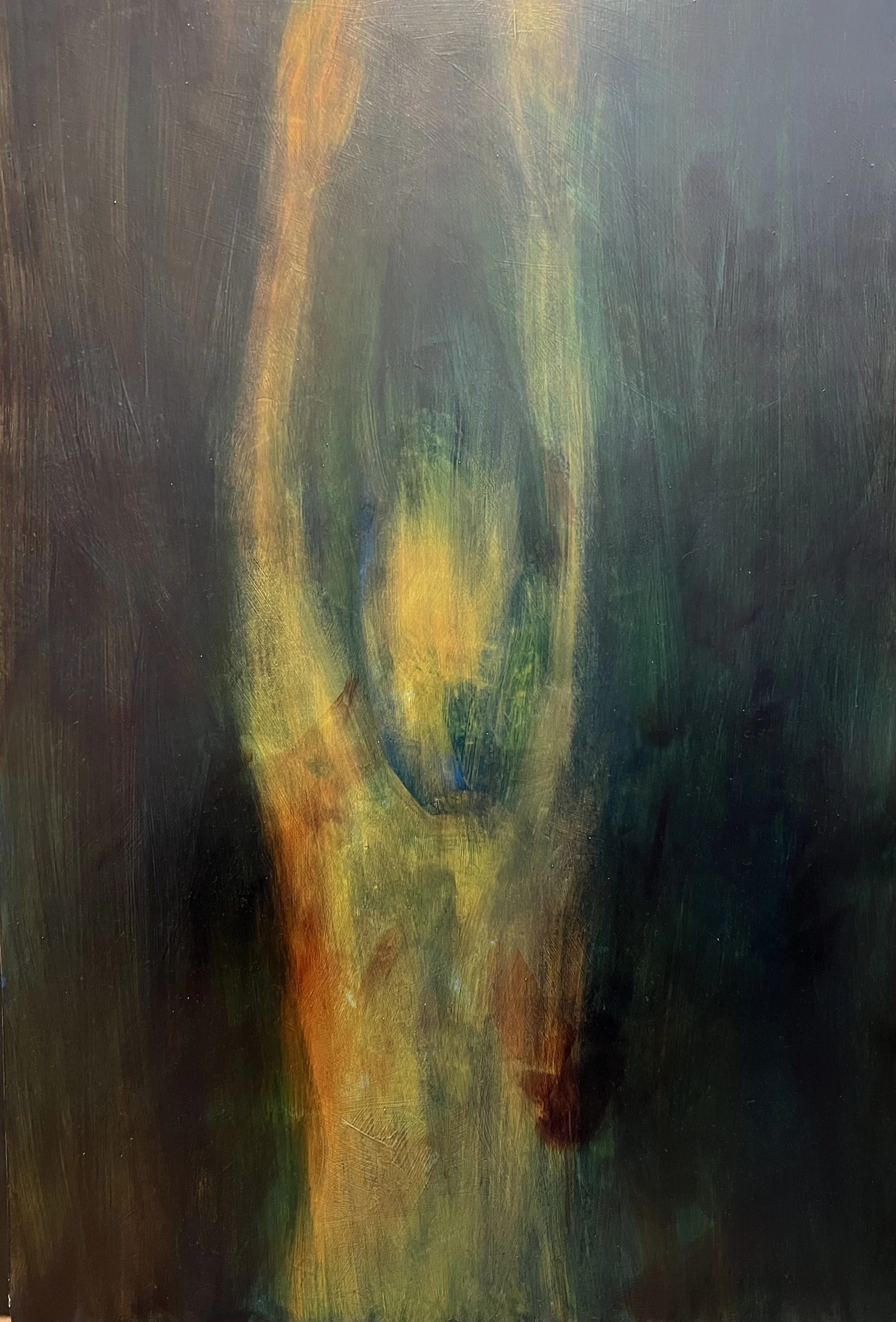
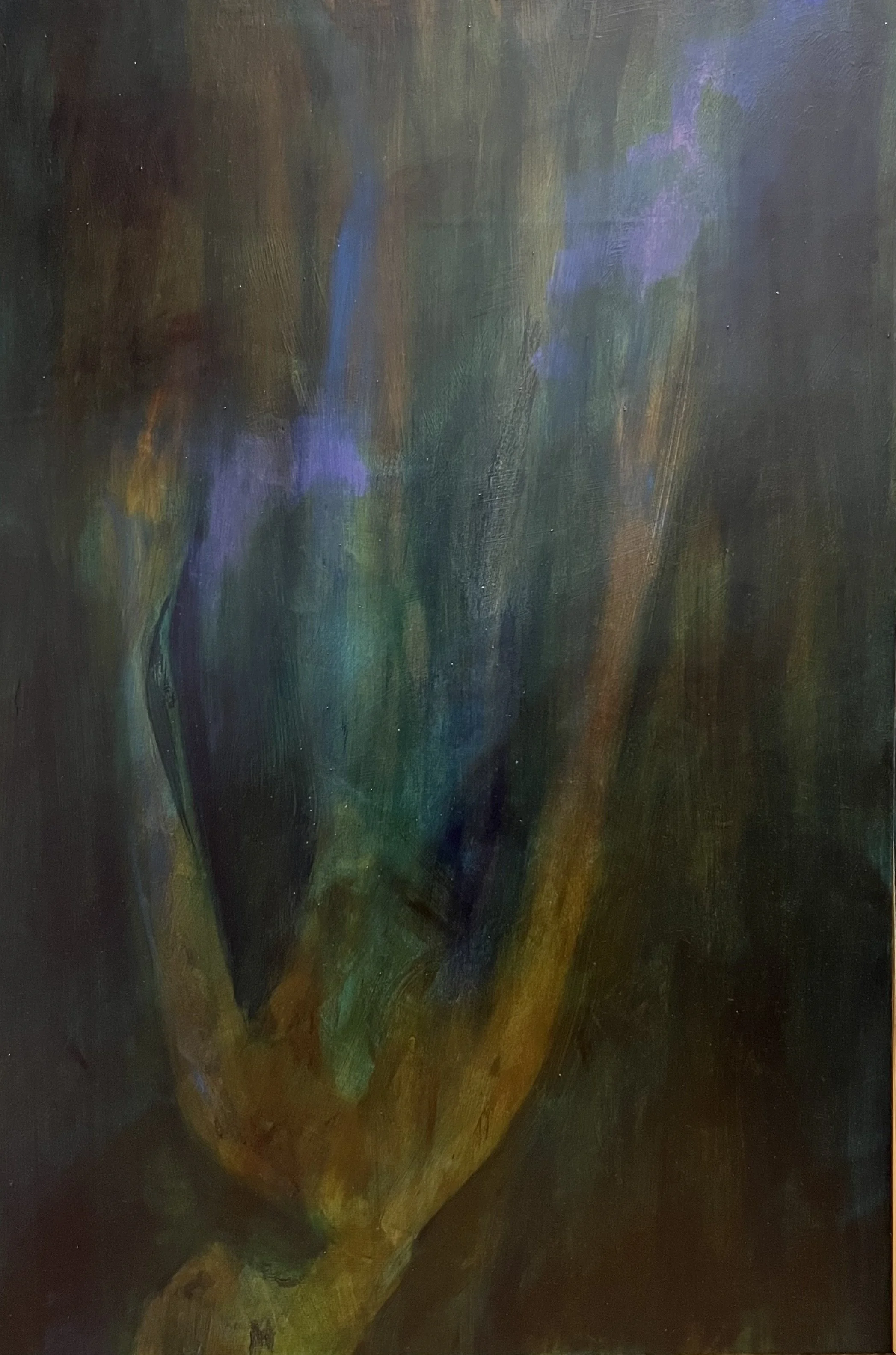
Deep Wrack, Dive Boy. Acrylic, oil paint on canvas. 90 × 60cm
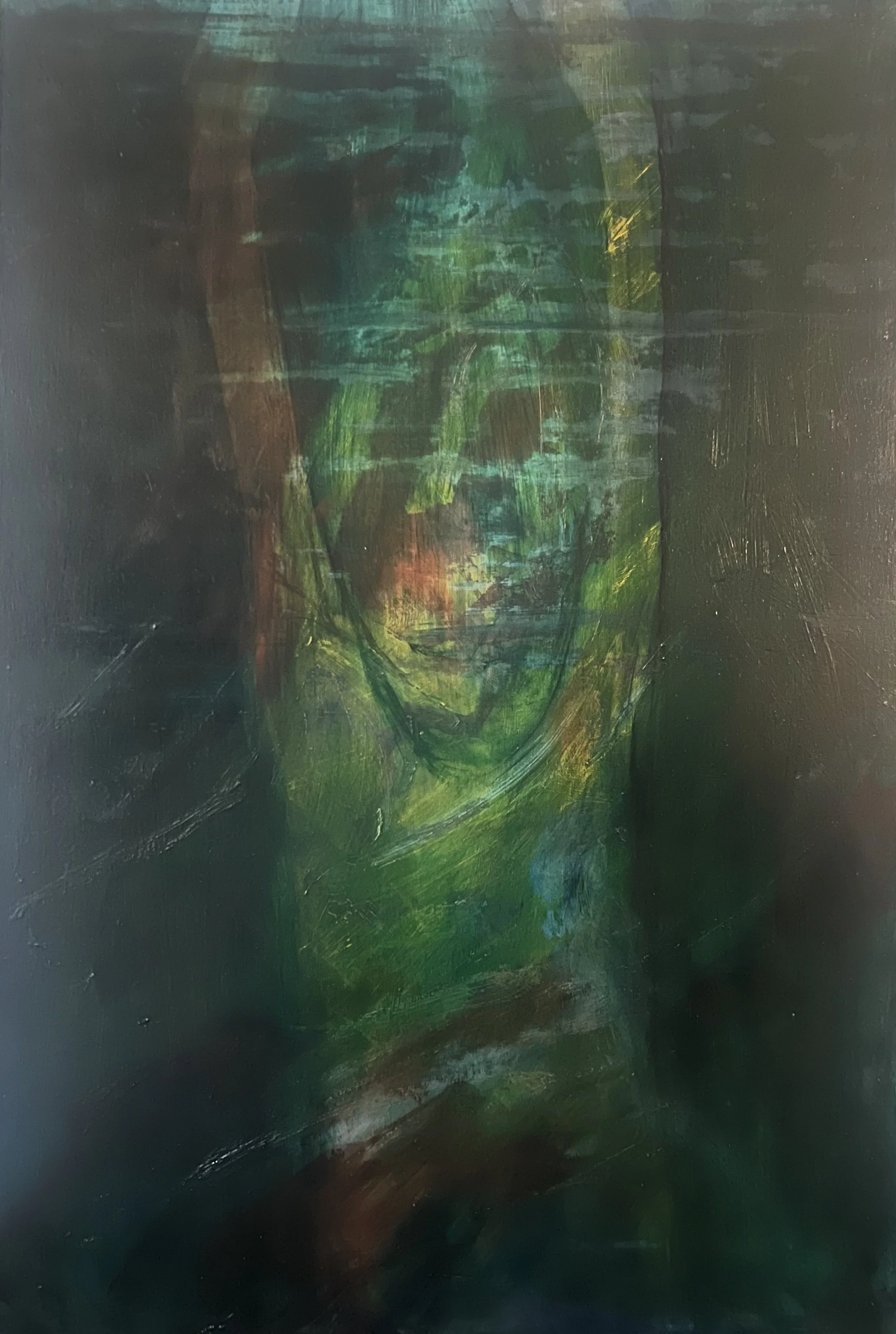
Deep Wrack, Upside Down Man. Acrylic, oil paint on canvas. 90 × 60cm
Deep Wrack, Bombie Girl. Acrylic, oil paint on canvas. 90 × 60cm
Holdfast Artist Statement
Wrack Series, Tang Series
“The foreshore is so dear to all supernatural beings; it is fixed, it shifts, it is present and absent, lending itself to magical thinking.”
— Dennison, W. T. (1995), Orkney Folklore & Sea Legends1
My practice explores who we are in relation to nature. I am drawn to the transcendent and transformative qualities of the natural world, its ability to create awe and its ability to ground us. Within each of my works is a note of solastalgia: the sadness of witnessing environments and creatures that we love begin to disappear.
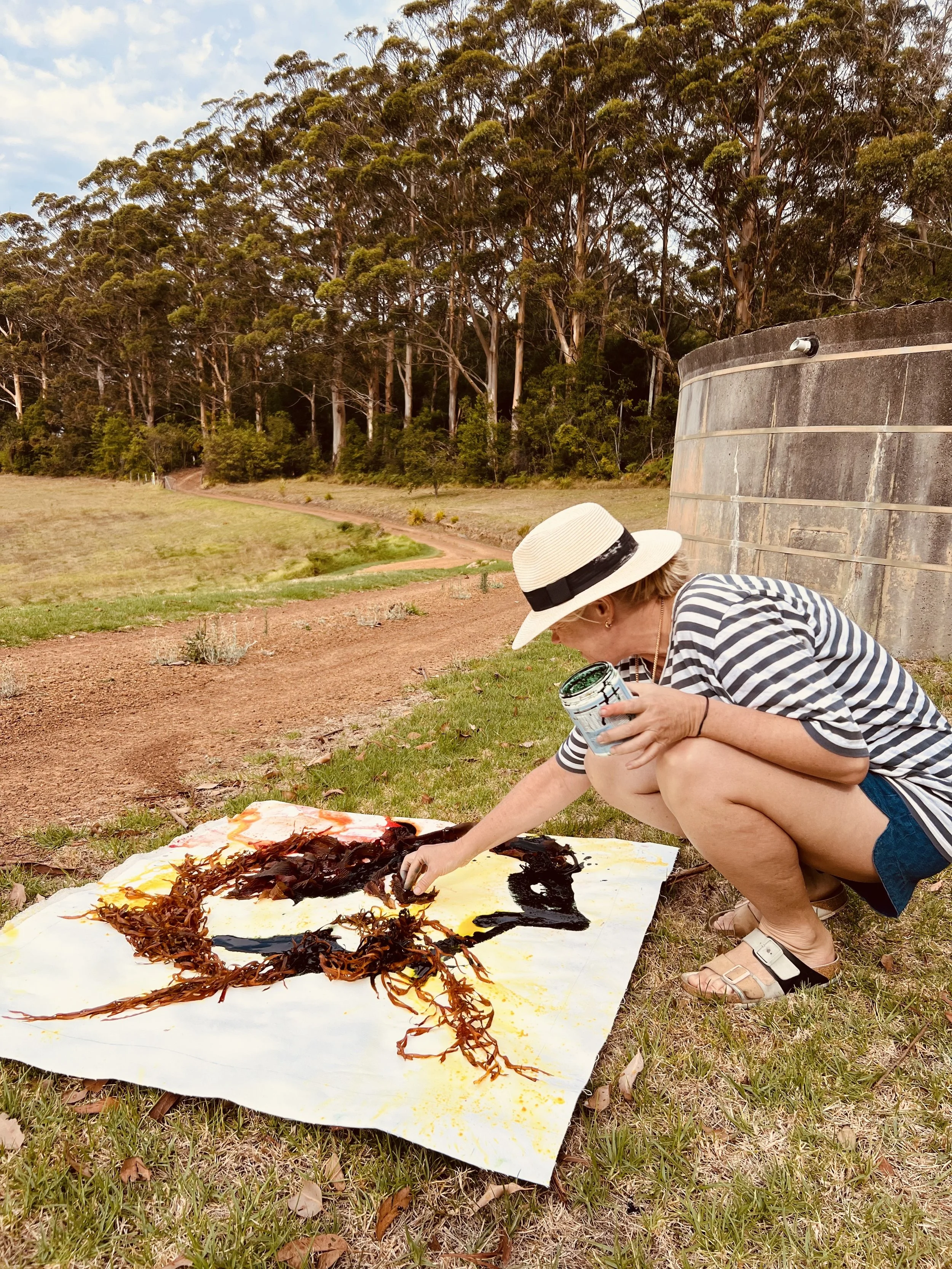
For this exhibition, I have turned to seaweed as both subject and collaborator, asking who we have been—and who we might become—in relation to it. The works arise out of time spent on shorelines littered with giant kelp in Orkney, Scotland, and Arthur River in Tasmania. Engagement with Fremantle-based seaweed innovators further informed the works, along with a deep dive into the history of Mid-Victorian women who found scientific and personal empowerment through marine biology.
Seaweed has long sustained human life as food, fertilizer, medicine, cosmetic, and livelihood. On the island of Tiree in Scotland, generations of my husband’s family harvested tangle to supplement their crofting income. In Orkney, where my mother-in-law is from, seaweed also lives in story and superstition. The Nuckelavee, a horse-like sea creature said to bring disease and death, was believed to be provoked by the smell of burning seaweed. The Tangie, another sea spirit, could disorient wanderers, tangling them in phosphorescent confusion and drawing them toward the sea. In these stories, seaweed is not passive—it is animate, entangled with fear, survival, and imagination. Shorelines are liminal, shifting spaces—where we belong, yet never fully and it is easy to understand how such mythologies took hold.
Wrack comprises oil paintings built slowly through layers of transparent glaze. These works inhabit the instability of tide and flow, where forms emerge and recede. They evoke the embodied memory of swimming through weed—of plunging, entanglement. The repeated central motif of the larger works echoes the cyanotypes of botanist Anna Atkins (1799-1871). Wrack invites reflection on fragility, freedom, and our shared future.
Tang extends this exploration through paintings made with seaweed and Asparagopsis macroalgae pigments, applied using brushes fashioned from seaweed and sticks. These works sit between observation and invention: depictions of real harvesting sites alongside imagined seaweed beings. In contrast to the monstrous figures of folklore, these forms suggest sensitivity, agency, and kinship. The accompanying sculptures further give presence to these beings, bringing the voice of seaweed into dialogue with our own.
Some of the pink pigment running through the works was developed by Fremantle-based innovators SeaStock, derived of macro-algae from locally sourced Asparagopsis. Beyond its visual qualities, this material carries the potential for carbon reduction, as well as applications in medicine, nutrition, and cosmetics—revealing seaweed as a quiet but powerful agent of change.
To acknowledge the presence of supernatural beings beneath the waves is not mere magical thinking, but an acceptance of interconnectedness—one that recognises that their survival, like our own, is bound to the health of the sea. In tending to what lives below the surface, we tend also to ourselves.
HOLDFAST Project
Tang Series
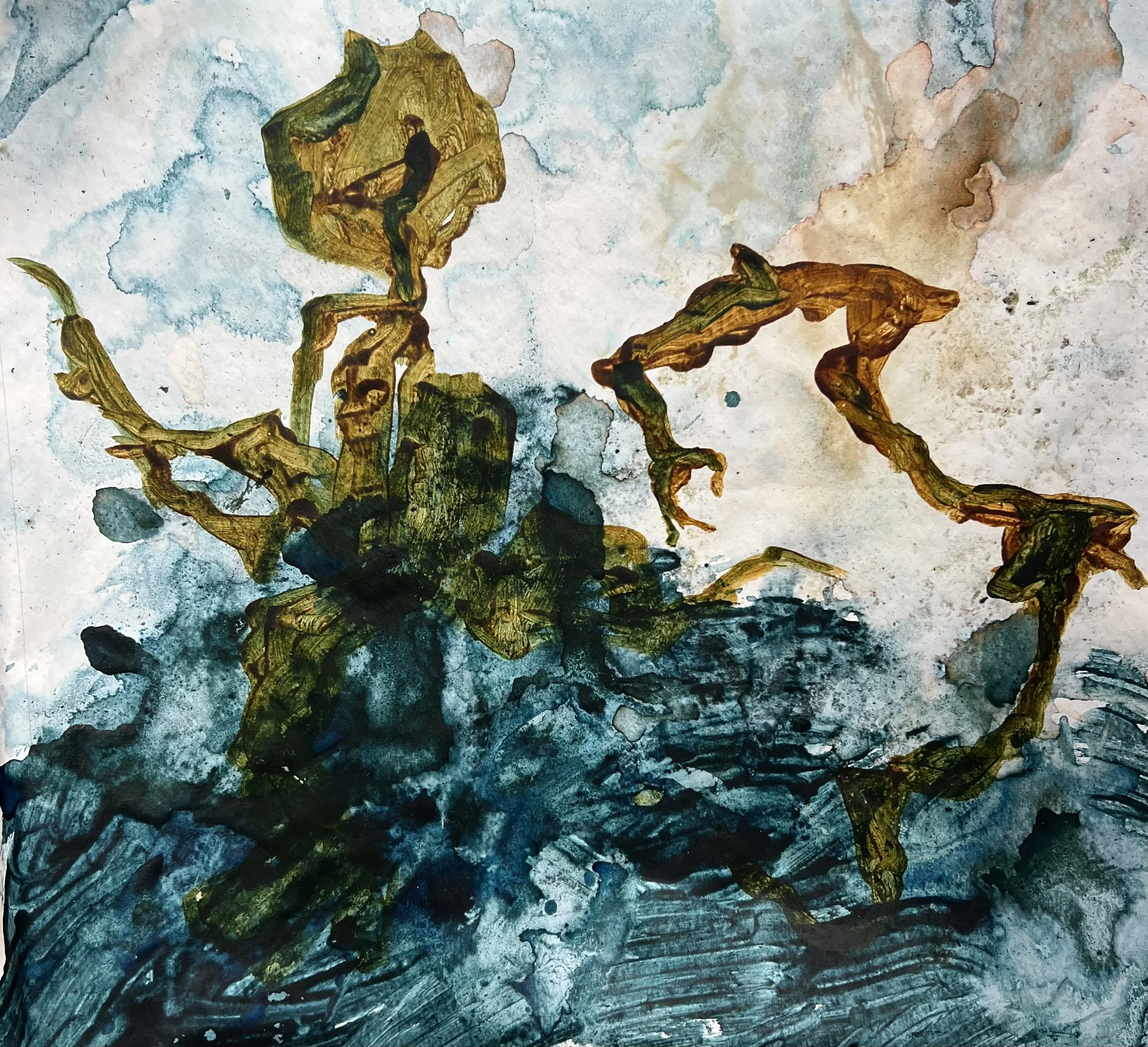
Dance of the Tang. Seaweed, natural and synthetic pigments on canvas. 88 × 95cm
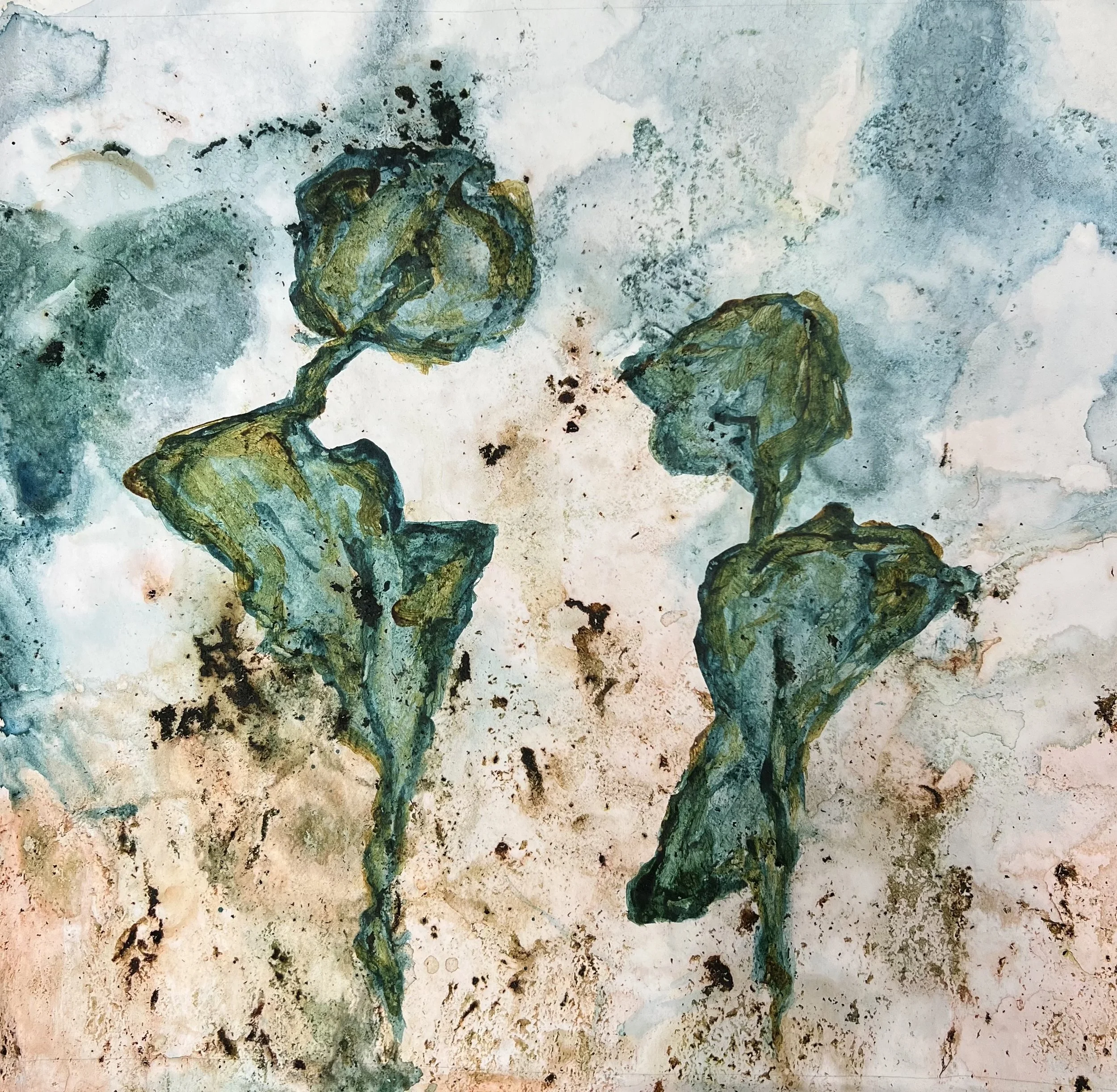
Congress of the Tang I. Seaweed, natural and synthetic pigments on canvas. 86 × 96cm
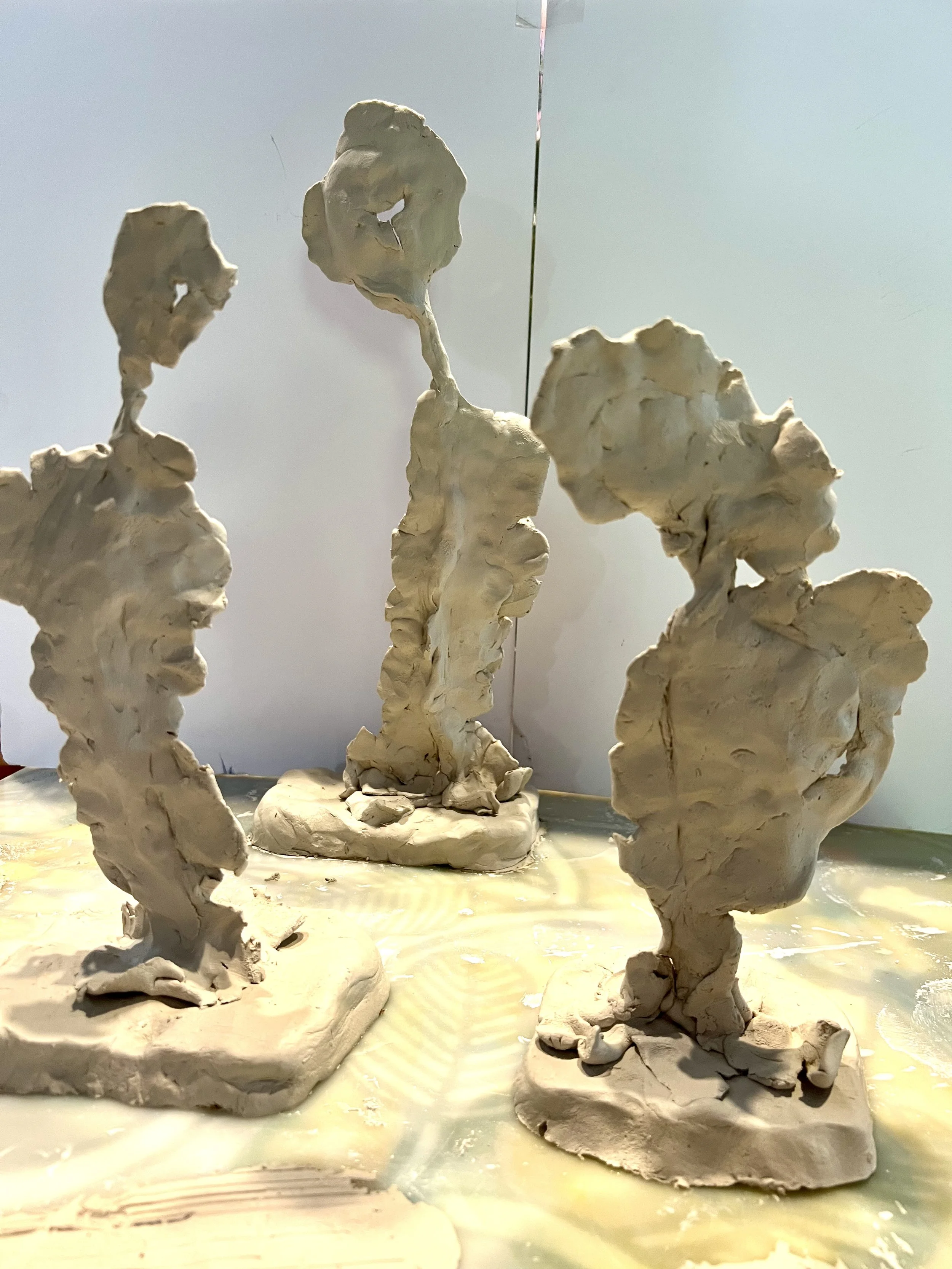
Congress of the Tang II. Paper clay and wire - WIP shot
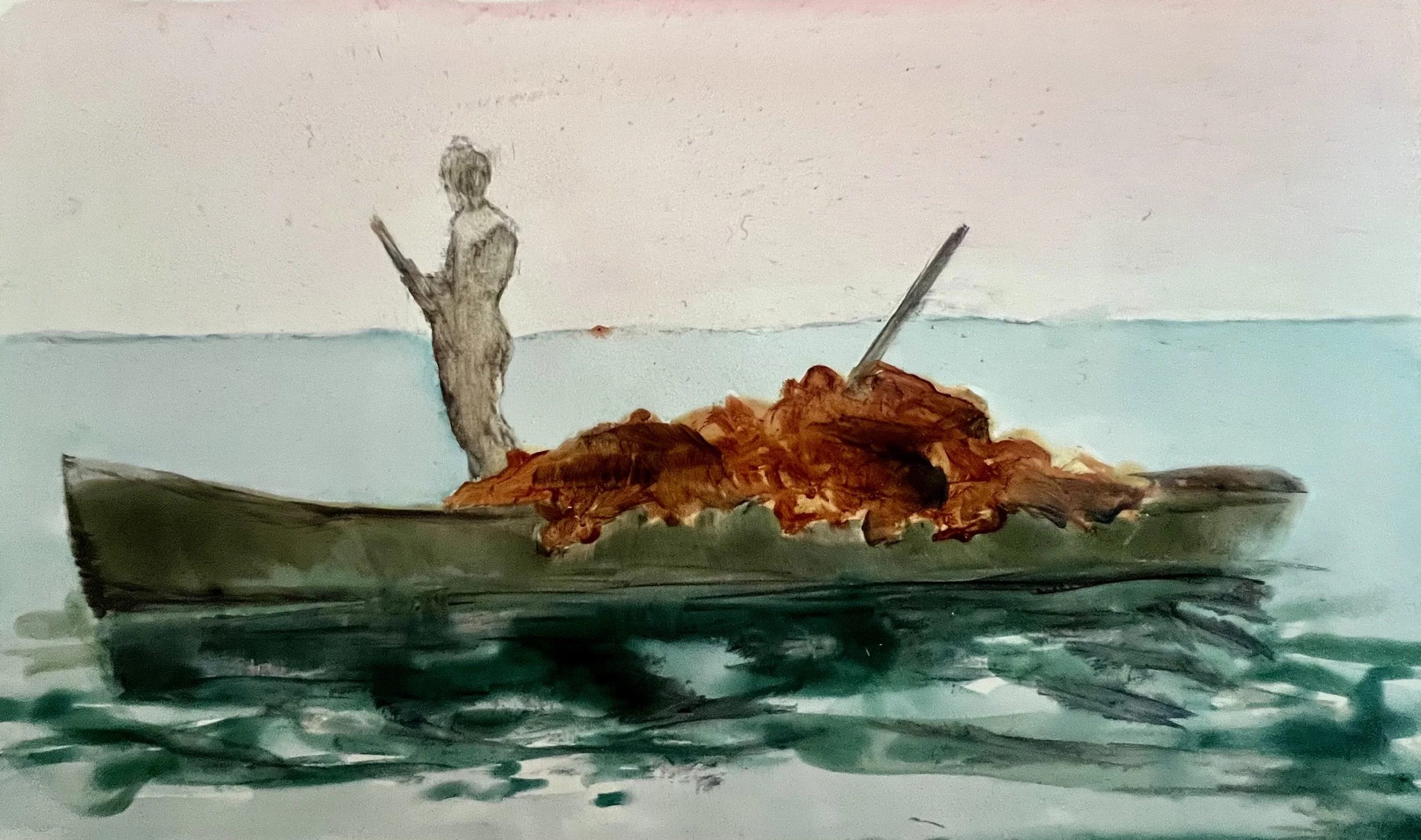
The Mosser. Seaweed pigments on clayboard. 7.5× 12cm
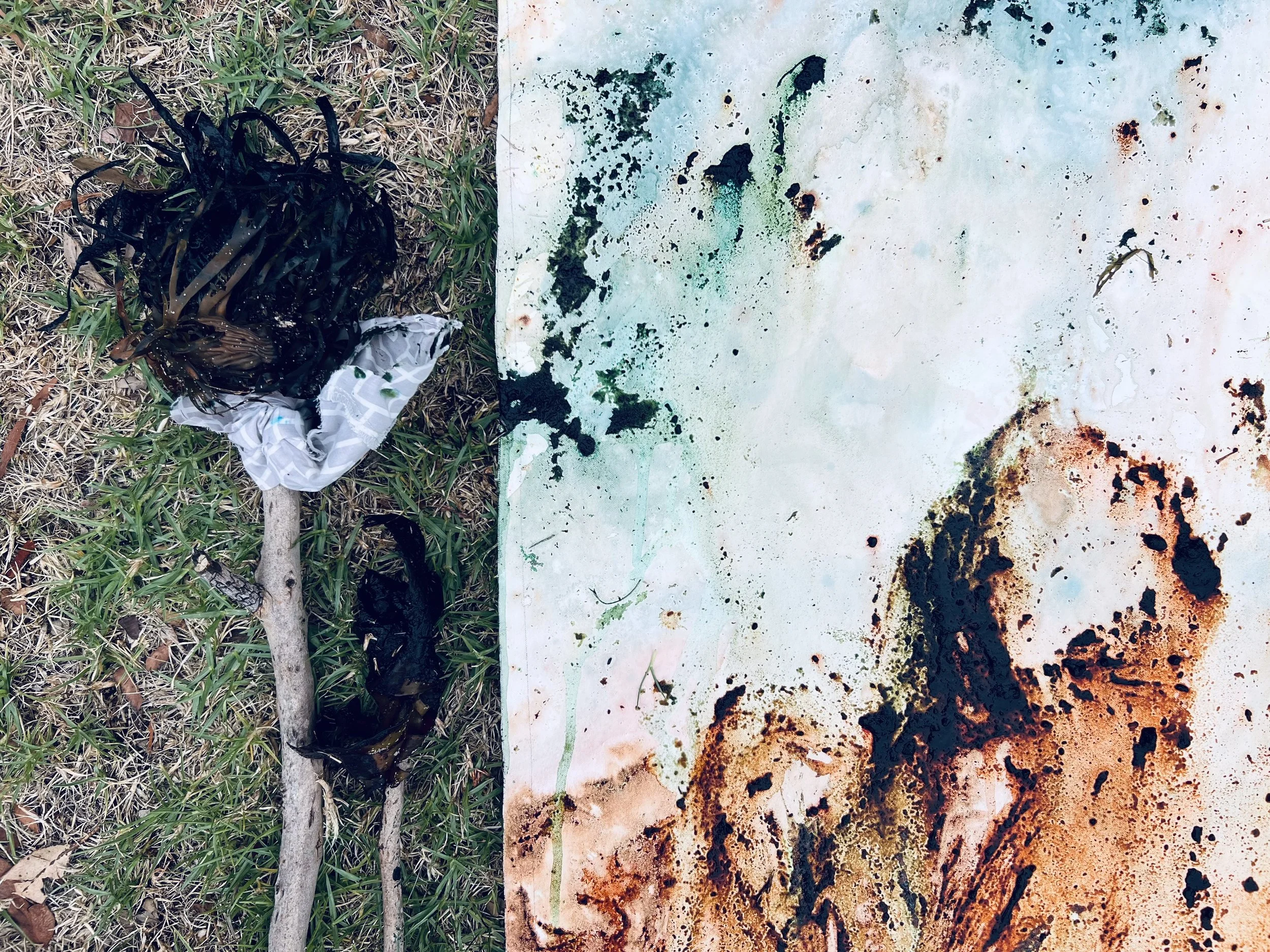
Seaweed brushes and pigments

Transformations Between and Among Rocks and Critters
“We are all lichens; so we can be scraped off the rocks by the Furies, who still erupt to avenge crimes against the Earth. Alternatively, we can join in the metabolic transformations between and among rocks and critters, for living and dying well" (Haraway 2016, 56).
Transformations Between and Among Rocks and Critters is a response to coastal regions of both Western Australia and Scotland, focussing on the islands of Wadjemup (Rottnest) and Orkney. These islands are located at opposite ends of the earth and share a wild and unspoilt beauty. They are also home to one of the oldest living things on earth, lichen. Lichen are a unique symbiosis of fungi and algae and offer us a lens through which to consider alternative and harmonious ways of surviving climate change.
The installation comprises five elements. The painted panels, The Furies and Tomorrowing, are an emotional response to the immensity of each place; of being transported by wild places. The sculptural elements are more representative and take us from the macro to the micro with an invitation to look more closely. They seek to remind us of what we notice as time slows down. The installation Among Rocks, is a poetic tideline, each rock wrapped with copper foil and reflective of smaller versions of rocks collected from the islands. The copper sculptures, Interlaced, are hand-forged, marked with sand, fire and Verdigris and engraved with images of lichen photographed on site. They are accompanied by a second set of open copper biomorphs, Morphs. None of the copper sculptures are sealed, allowing space for time and weather to leave their marks upon the surface.
The collective works are an act of reverence for nature’s small wonders; and for the refuge and restoration found in the wild. For living well, like the lichens.
Reference
Haraway, Donna J. 2016. Staying with the Trouble : Making Kin in the Chthulucene. Durham: Duke University Press.
With special thanks to the Henderson Bespoke team for their invaluable guidance and assistance in making the copper forms. @henderson_bespoke


Installation view photographs below by Dan McCabe @artdoc_au


Finalist, Rockingham Art Prize, 2025

Finalist, Collie Art Prize, 2025
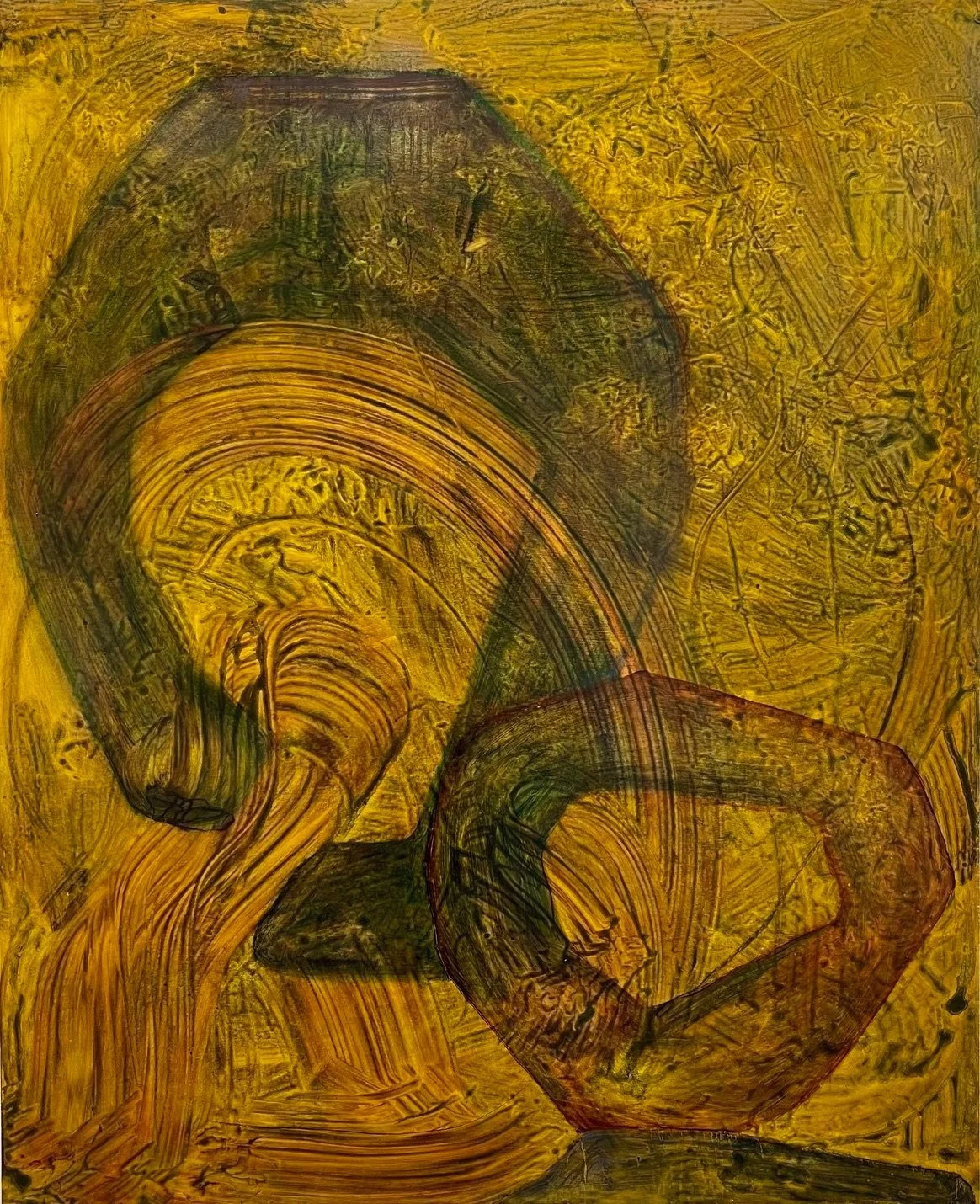
Cadmium & Cinders
“Cadmium & Cinders” examines geographical and ecological sites in close proximity to my home in North Fremantle; specifically drawing upon limestone cliffs, and areas of remnant bush that have survived as a result of pre-colonial, colonial, industrial and residential impact. I imagine the many feet that have walked the same narrow track as me, high on the cliff overlooking Rocky Bay. My endeavour in this body of work is to capture energetic echoes of past human and non-human inhabitants and translate this into abstract oil paintings.
Archival research also informed my work, particularly where the land was impacted by industrialisation leaving toxic lead, arsenic, cinders and cadmium in the soil. Some references, such as cadmium oil paints, charcoal and limestone, have formally translated onto the canvas.
Oil and charcoal on canvas or timber, 120 x 100 cm
A Bird Flew Across My Path
Winner, Paddington Art Prize People’s Choice 2024
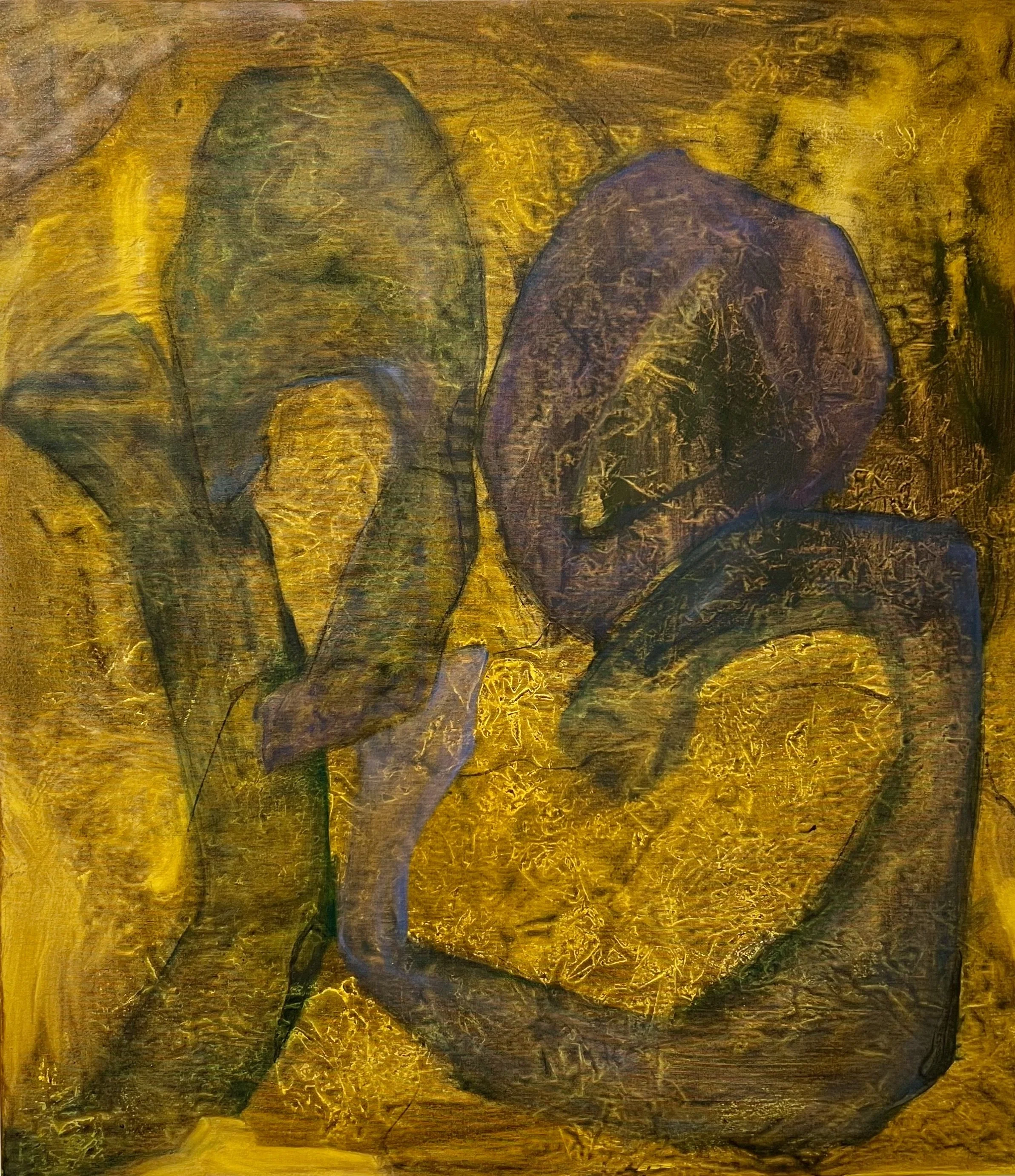
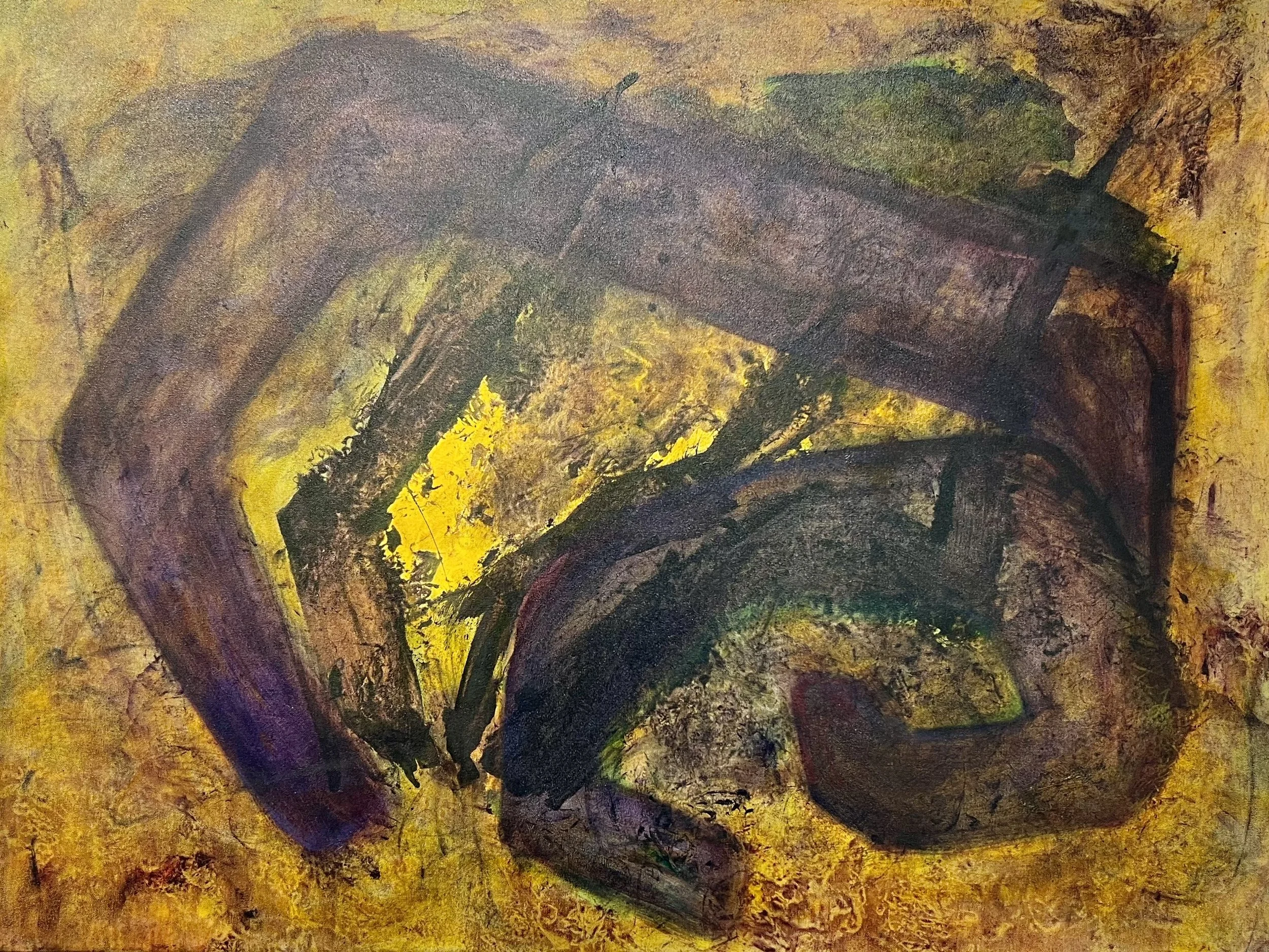
GOAT
A series about a man and a goat wandering through a treeless landscape, made after a camping trip in the Pilbara. A nod to Sydney Nolan’s Burke series and the futility of man versus nature - but rather than a camel we have a goat. Goats were often sighted roadside, running in feral gangs or staring us down. Our northern lands are littered with stories of conquest and daring as much as it contains a history of tears and hardship. The Goat can be interpreted as the Greatest Of All Time, the devil, a symbol of power or clown.
Oil and copper foil on cradled FSC timber, 23 x 30 cm
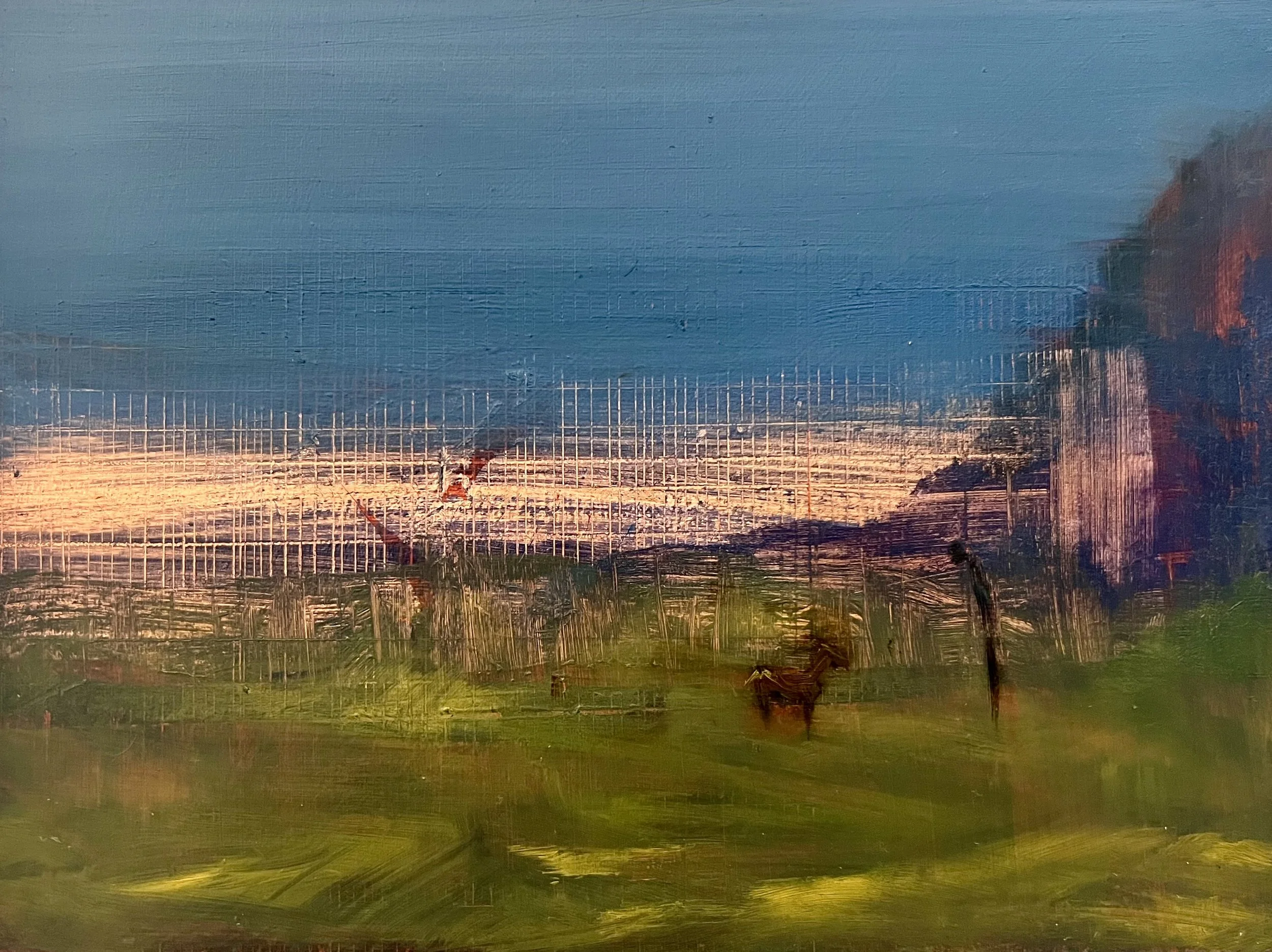
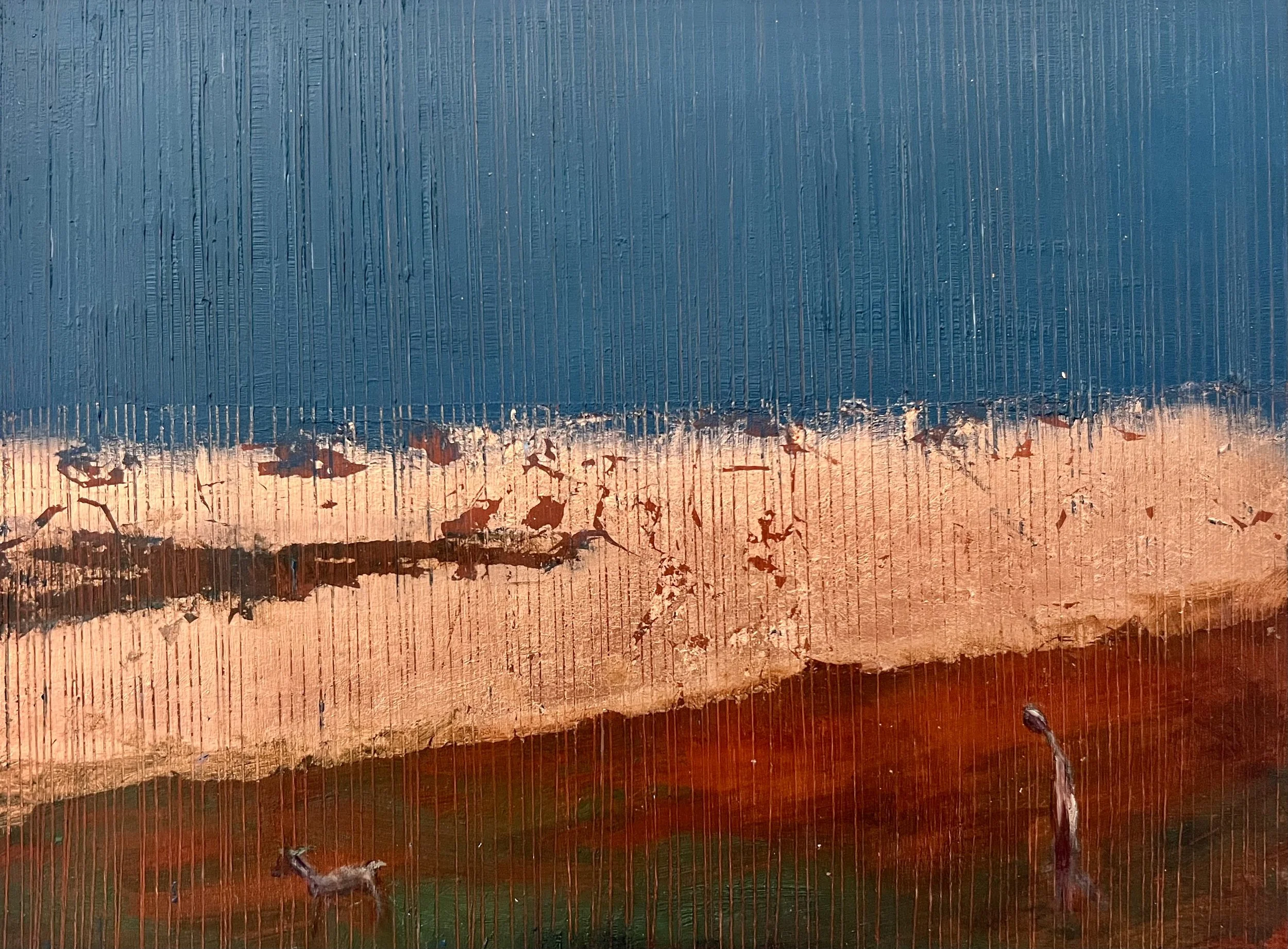
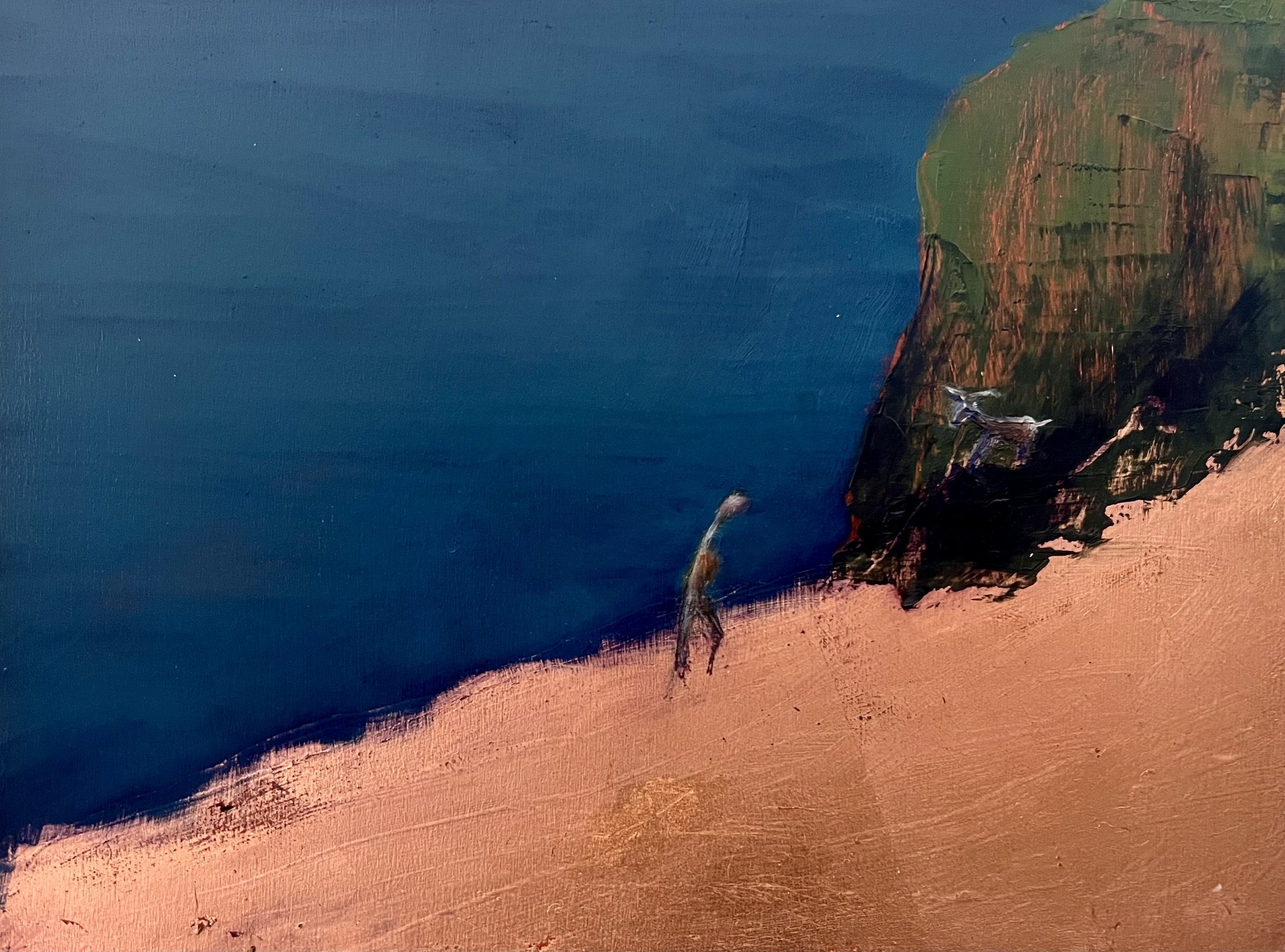
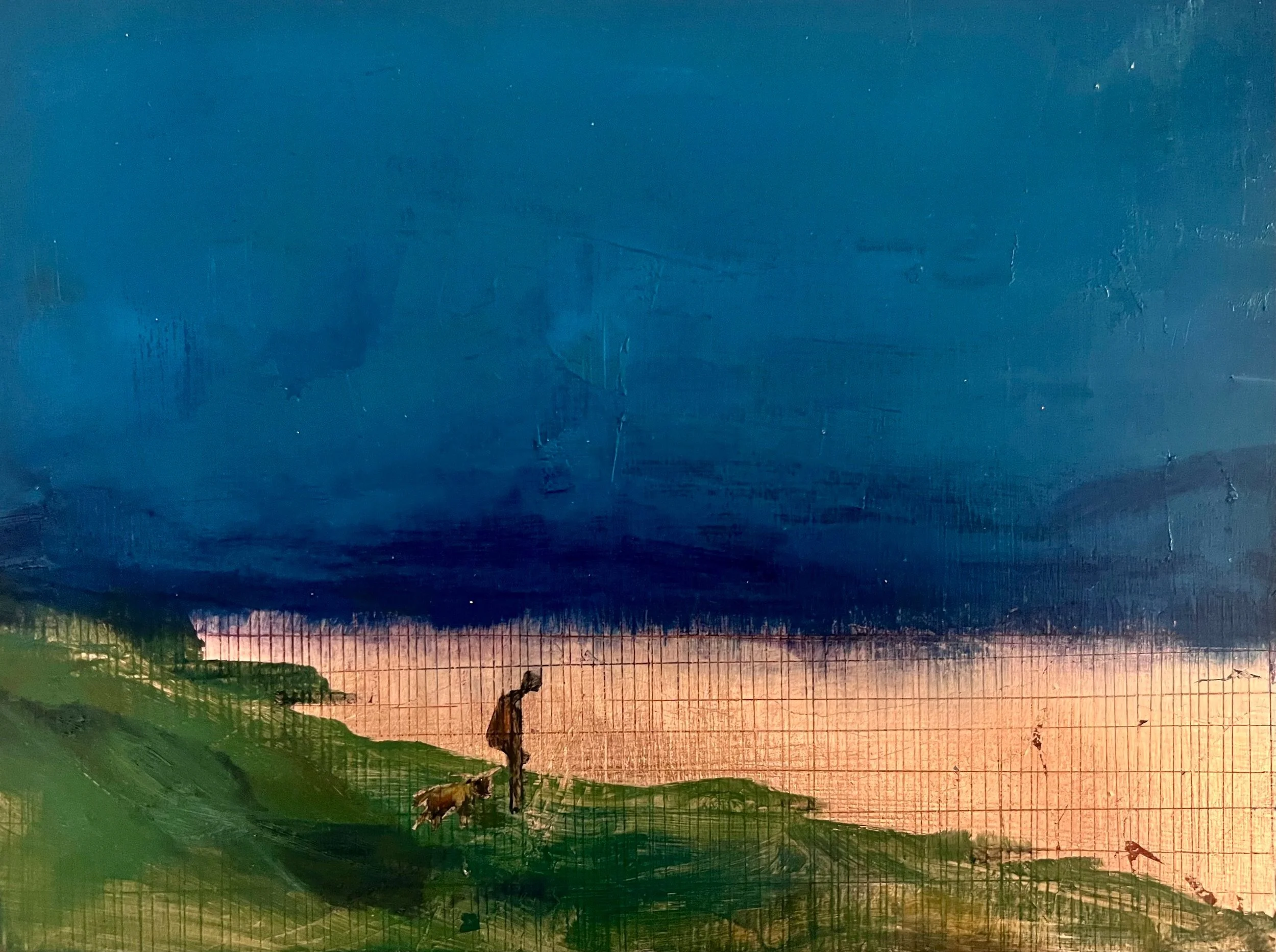
Finalist Cossack Art Prize, 2025